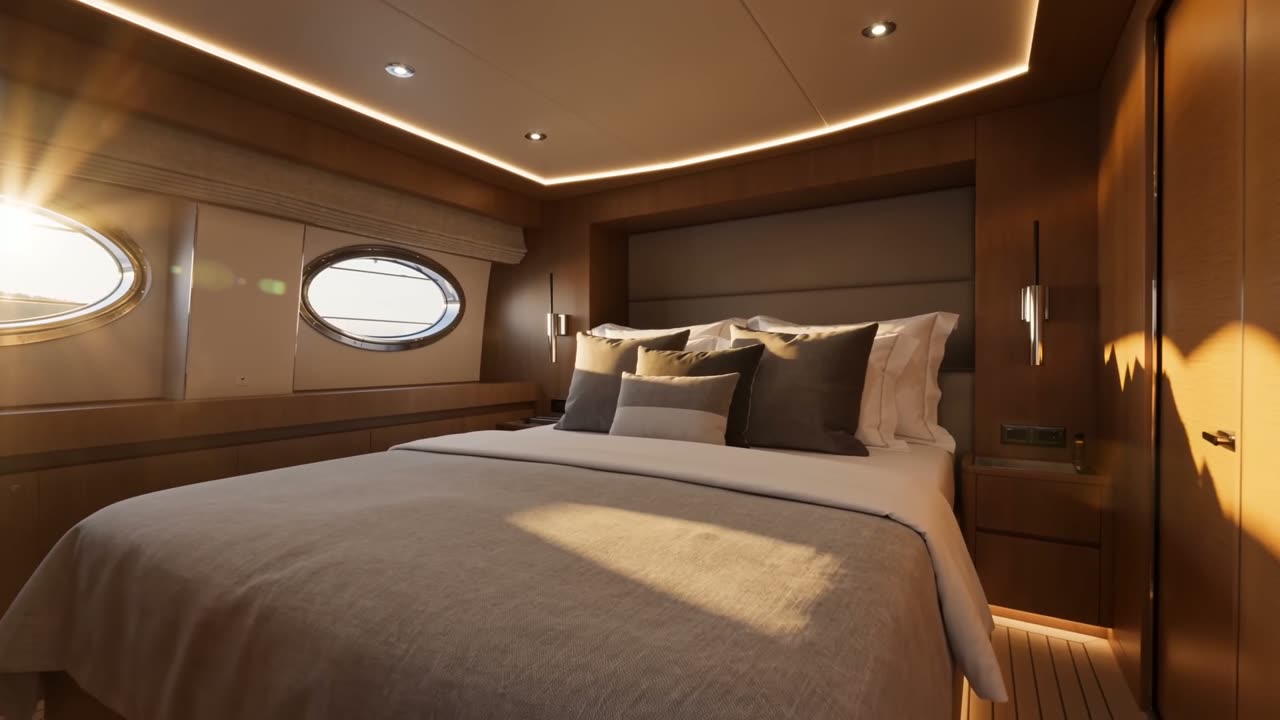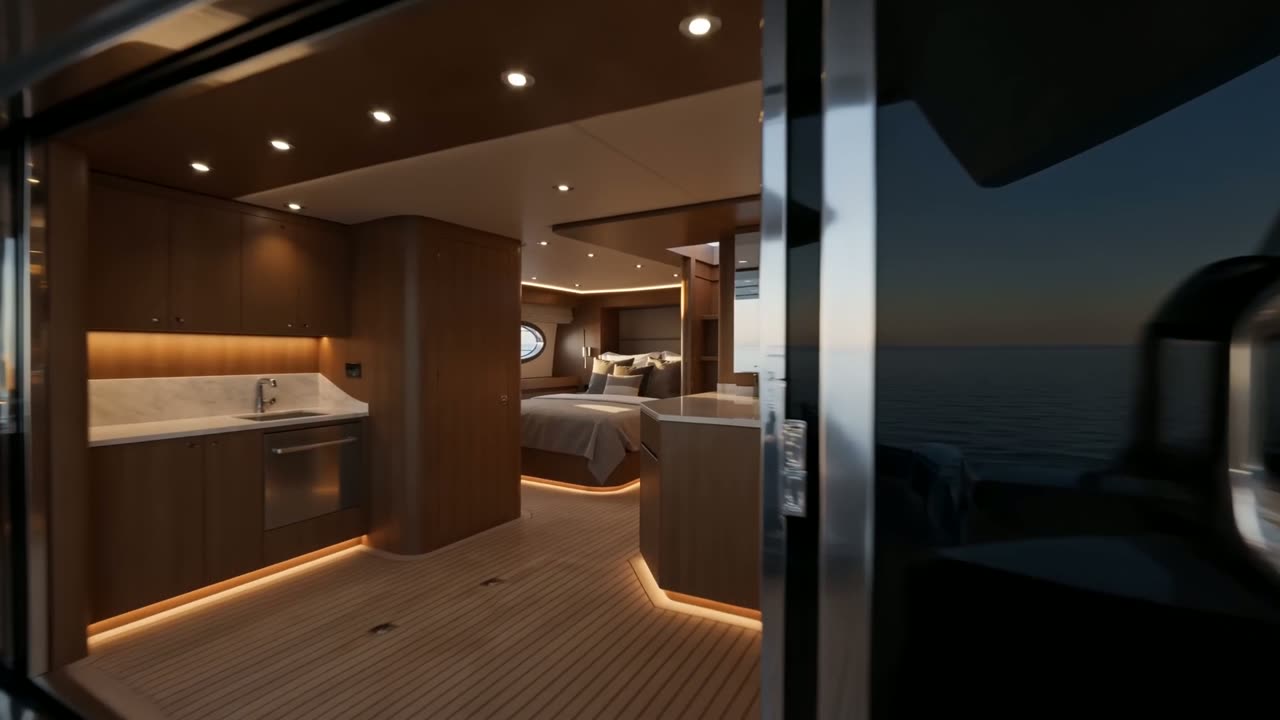
Off-plan is the strangest corner of the luxury property market. A developer is asking a buyer to commit millions to a house that has not been built, on the strength of drawings, renders, and a marketing suite in Knightsbridge. Every material has to work harder because none of it can be verified against reality.
The launch film is the piece that carries the most weight.
What renders cannot do
A render is a still image. It shows a room, a view, a facade. What it cannot show is the passage from one to another — the walk from the entrance hall into the drawing room, the way the ceiling height changes, the light shifting through a window as the sun moves. Those are the moments a buyer imagines themselves in. A render can hint at them. Film has to build them.
The best off-plan films use the developer's existing renders as source material and stitch them into a sequence that moves the way a person would move through the finished building. That is not a technical exercise. It is a directorial one — deciding what to reveal first, how long to hold on each moment, when to cut away.
What buyers actually decide on
At five and ten and twenty million off-plan, buyers are rarely deciding on the finish. They assume the finish will be immaculate; that is what the developer's reputation is for. They are deciding on two things.
The first is the address. A view of Hyde Park from a specific floor. A position on a specific square. That work is done by the site itself, and the film's job is to establish it clearly and beautifully in the first fifteen seconds.
The second is the life. A buyer at this level already has a house. They are buying an additional life — a London life, a Mayfair life, a pied-a-terre for the season. The film has to make that life feel imminent. Not the apartment, the life.
The mistake most launch films make
Most developer marketing films are made to impress the developer. They show every finish, every amenity, every technical achievement. They open with an aerial of the city, cut to renders of the lobby, cut to the pool, cut to the concierge desk, cut to a woman in a beige coat looking out at the view.
Buyers at this level have seen that film a hundred times. It reads as generic, and generic is the worst thing a launch film can be at the top of the market. A single-bedroom flat and a three-floor penthouse should not be sold with the same visual language.
The films that sell off-plan feel bespoke to the building. They borrow the language of the architect — the materials, the proportions, the light — and they let the film move at the pace the finished building will move.
Working from what exists
Every off-plan brief begins with an incomplete set of assets. Some renders, a set of floorplans, perhaps a walkable CGI, occasionally a physical model. The developer's marketing team is often anxious that there is not enough to make a film from. There almost always is.
What we need is a clear sense of the direction — who the buyer is, what floor of the building matters most, which view is the one the price hinges on. Given that, the existing renders can be sequenced, extended, and graded into a film that behaves like a completed piece rather than a slideshow of stills.
Timing
The launch film sits at the front of a campaign that will run for a year or more. It is the first thing a private buyer sees, and it is the one asset the developer will send to every serious enquiry from the launch event onwards.
For that reason, developers tend to over-commission — six versions, four cutdowns, two vertical edits. In practice the film that matters is the two-minute private-buyer version, and everything else derives from it. Get that one right and the rest follows.
What we do
Parallax builds launch films from developer renders, floorplans and CGI without a shoot day. The finished film is delivered inside twenty-four hours of receiving the assets, in a format that can be sent to a private buyer, played at a launch event, or embedded in a marketing suite. When there is no building yet, the film is the building.